The Dark Valley went past me the first time it got released. Initially it was the cover art that put me off (as well as the high purchase price) and the space requirements: two maps, three counter sheets — a proper mini monster. However, it somehow stuck on the back of my mind for quite some time and I kept checking out the game to see if I could get it on sale. Unfortunately, once I decided to pull the trigger it was sold out and I turned towards PC-based simulations: Gary Grigsby’s War in the East and Decisive Campaigns Barbarossa (both are now way old but still good).
Playing these games you notice that there’s just so much stuff — you are literally drowning in details. Playing a single turn takes hours; mostly due to the amount of things on screen but also due to the weird UI decisions — you would think that selecting and moving units on a map using a mouse is by now a solved problem…
Anyway, while controlling all the stuff is in itself a statement on the campaign, I never made it very far into the campaign without burning out. Board games to the rescue! This game is still a mini-monster (setup took about an hour but I had to sort the counters too); however I was hoping that the game would be actually playable in one-to-two hour blocks and still make progress doing so. Chit-pull makes this very solitaire friendly and also gives the option to stop at any time between activations.
Components
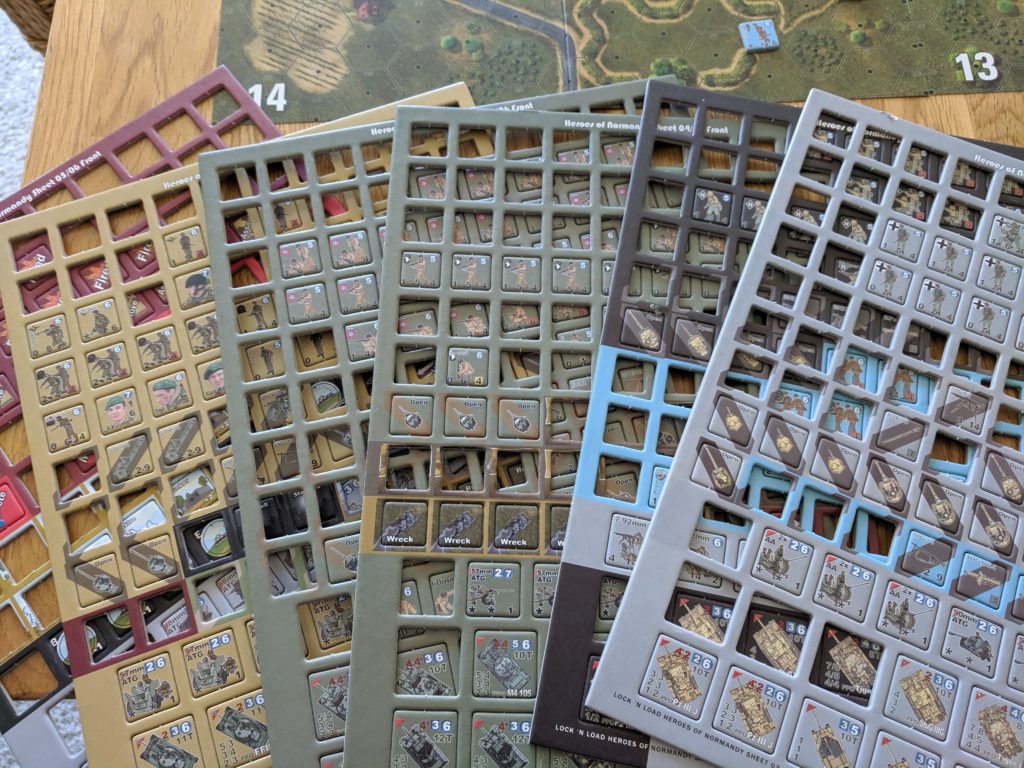
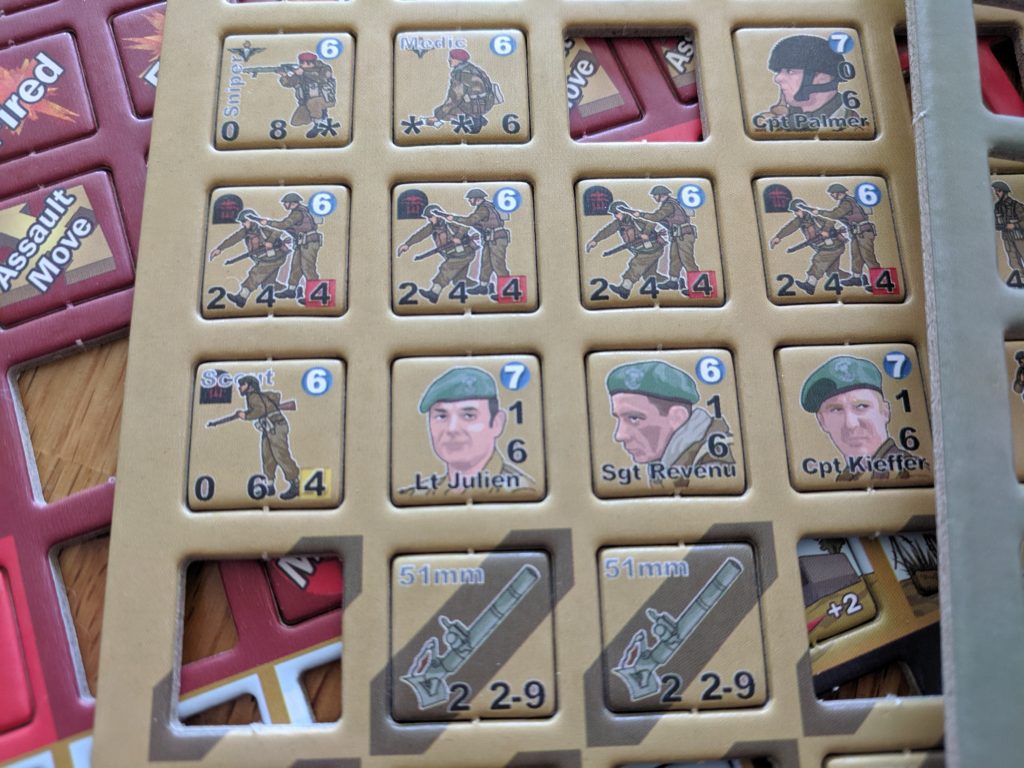
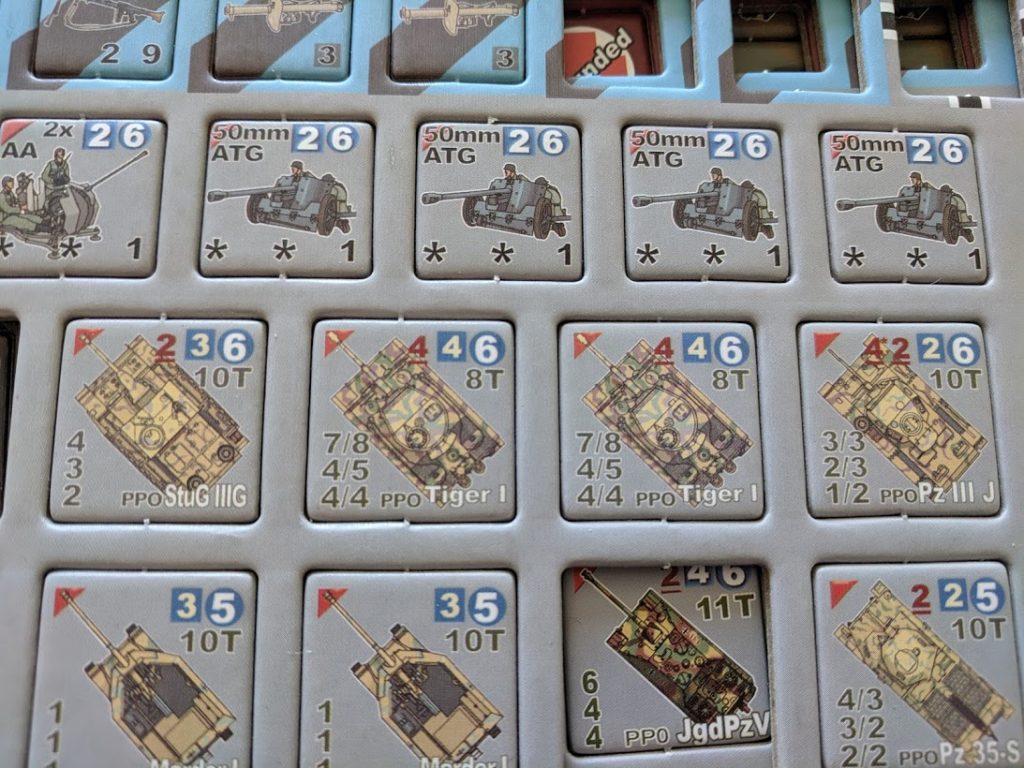
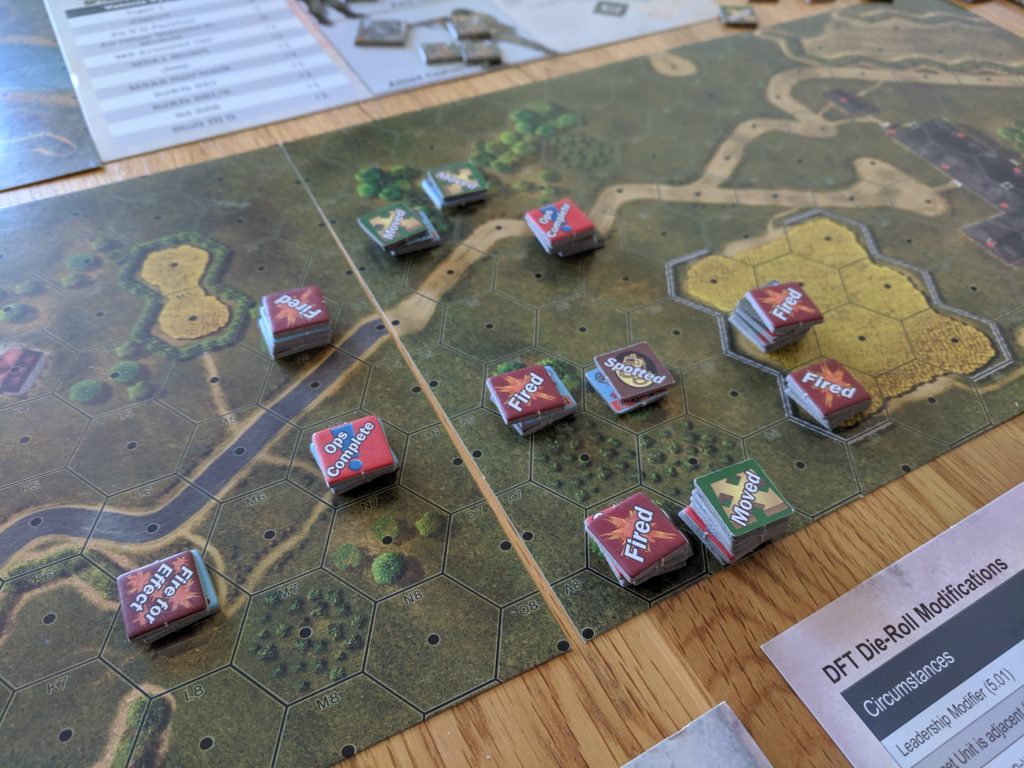
Components are of standard (very-high) GMT quality. The graphical design will not win any prizes though. The counters are crisply printed and well cut but all the muted colors (especially of the map) look almost too conservative.
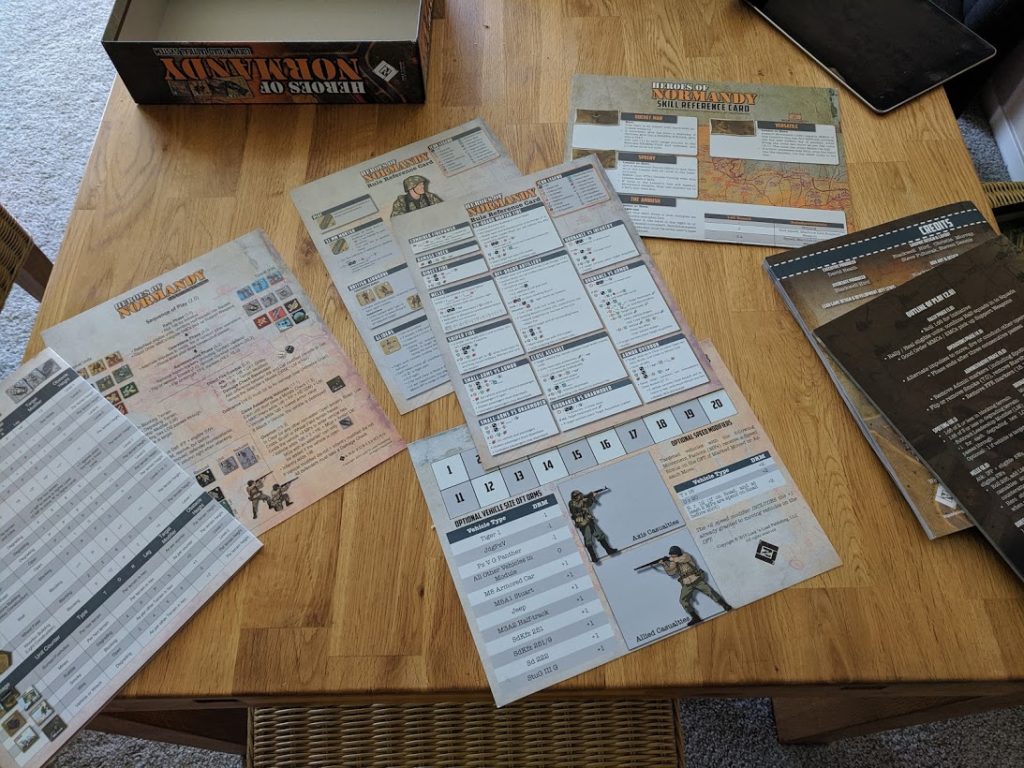
Three counter sheets of decent thickness are included, two mounted maps as well as a number of very well laid-out player aid charts. Rules clock in in a little less than forty pages and there’s a separate play book with scenarios and some questionable example of play (it literally shows every combat on turn 1 — I would have wished for more examples tackling specific questions, especially regarding logistics, etc) The rules are standard fare without much chrome, so you’re able to pick this one up immediately.
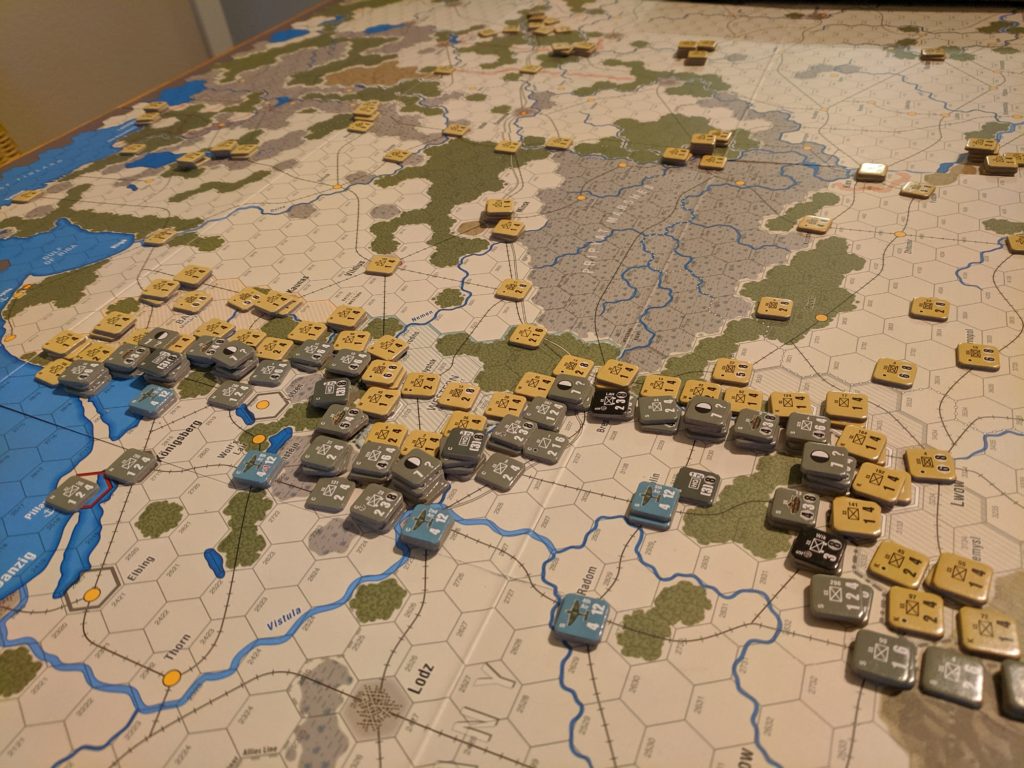
There are two surprises in the OOB: most (initial) units are actually single-step and ZOCs are reserved to mechanized or two-step forces. That makes it easier for units to infiltrate around other forces.
Both lack of ZOC as well as chit-pull requires a lot of work to pull off large-scale encirclements as the supply is only checked when the logistics chit is drawn. Two encirclements failed in my current game as either supply was not checked in time, counter attacks broke through the encirclement or at least damaged units so badly that they lost their ZOC and a line of supply was restored.
As said above, rules are straight-forward and well written. Little chrome means also that most of the rules are groked and rule references are kept to a minimum.
From what I’ve seen so far, I like how supply is handled: supply is only checked when the logistics chit is pulled. Supply lines are tied to depicted roads and railroads. Additionally, supply heads are either depots that move along rail lines or the Pz Army HQs. Soviet supply just goes along any free railway that’s close by. DC:Barbarossa did something similar, in that it did away with all the logistics except for the Pz Armies, that is where supply matters.
The whole game feels like it is geared towards the campaign/Barbarossa scenario. All other scenarios are the full campaign with different starting conditions (similar to what EastFront II does). I was hoping for smaller training scenarios, maybe a Road to Leningrad or something like that. Similarly, my concerns about the large footprint remain. I can’t keep this one set up for too long. The mounted maps don’t help either; paper maps can at least be back-folded for smaller scenarios.
State of Play – Barbarossa Scenario
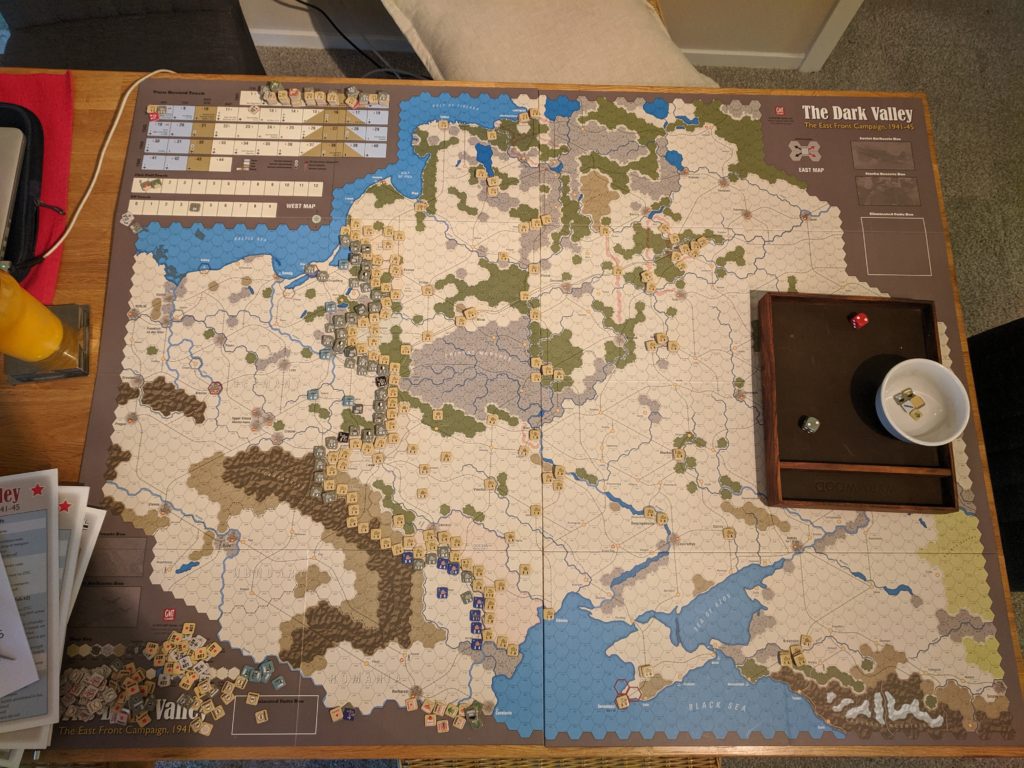
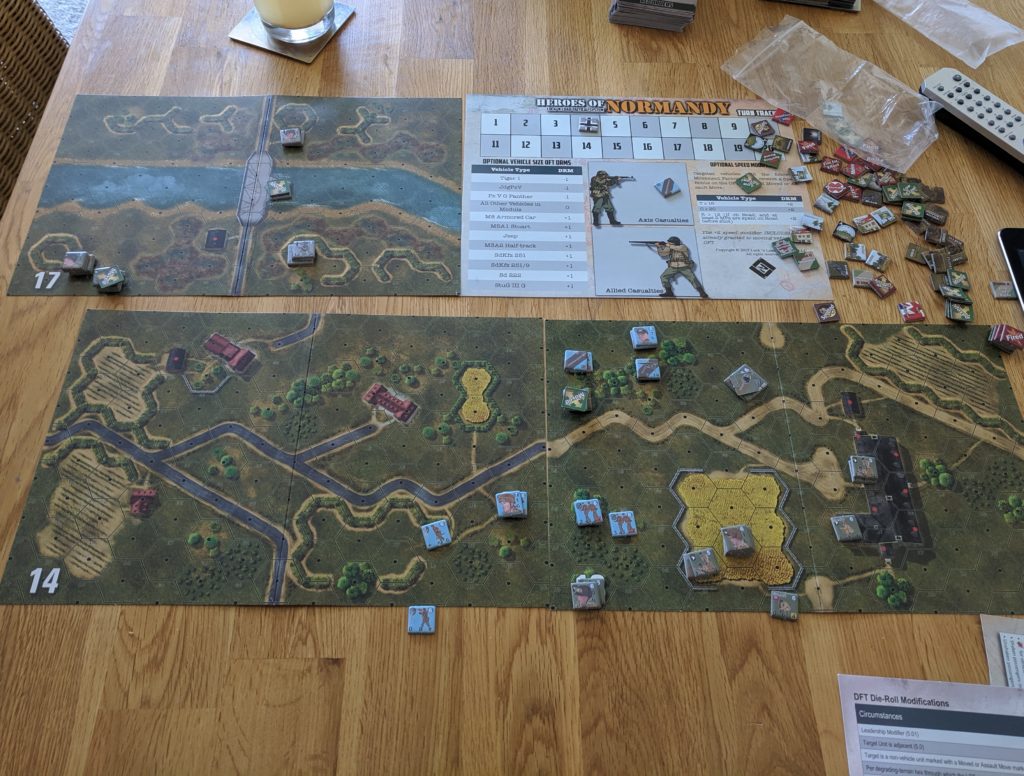
So, after punching and clipping all the counters (about 2 nights of movies) I set up the campaign. I didn’t put too much thought into optimizing starting positions — I just wanted to have a go at it and decide at the end of Barbarossa whether to continue.
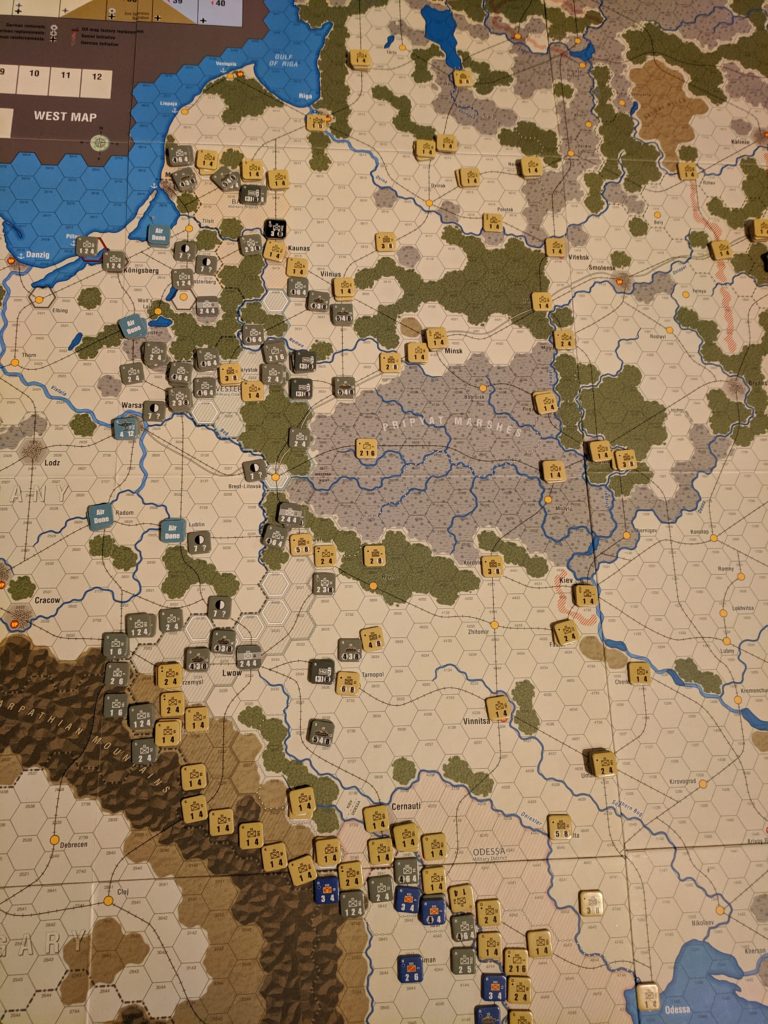
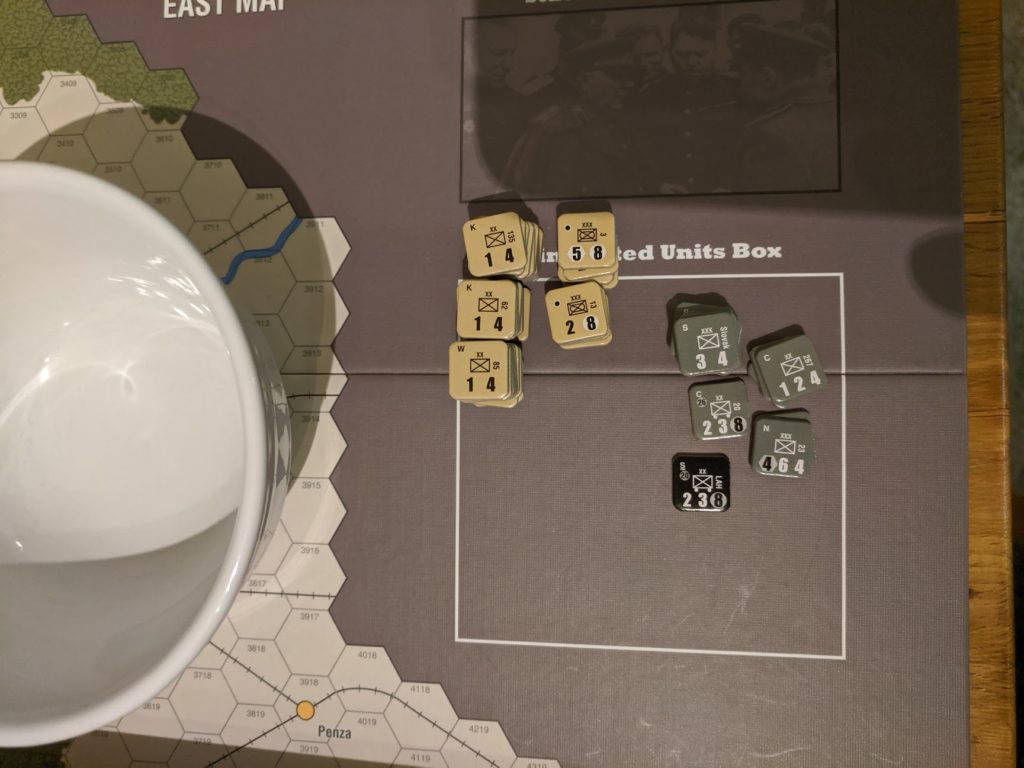
The initial turn saw tons of bad rolls on both sides which resulted in the destruction of almost too many German forces. Not pictured above are a successful breakout of a pocket due to good combat rolls. The Soviet counter attack chit was brutal — I rolled a 12 which meant that 12 attacks had to be taken. Some were successful but I also had to eliminate about 5 1-4 counters as there were no valid attacks possible.
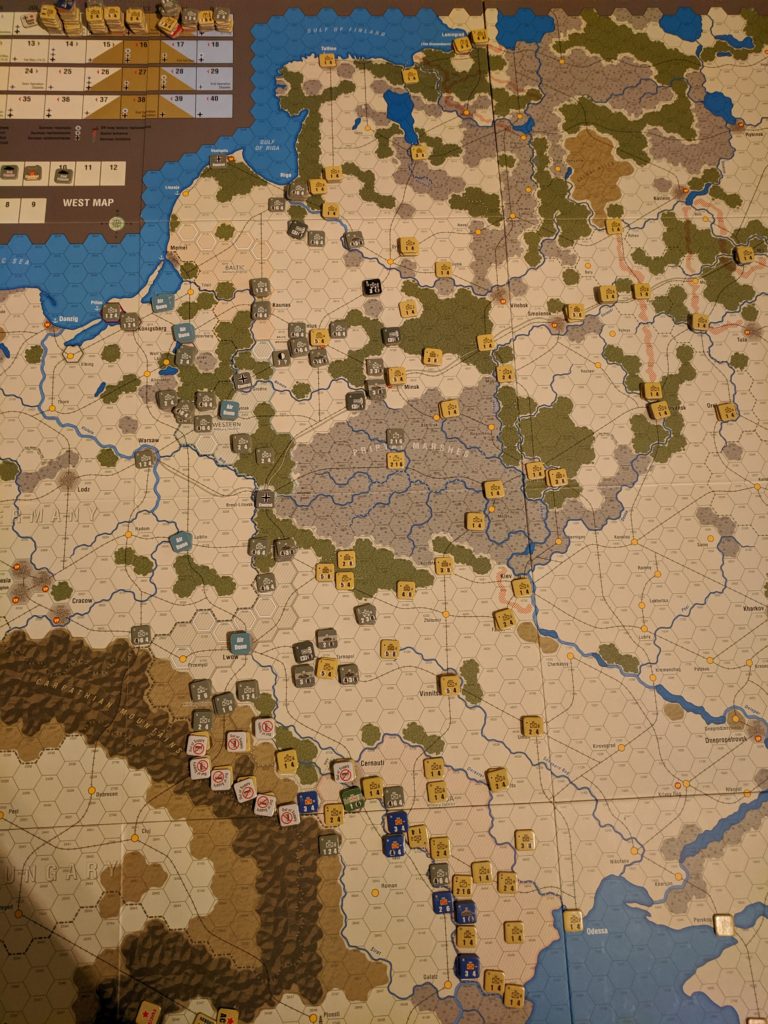
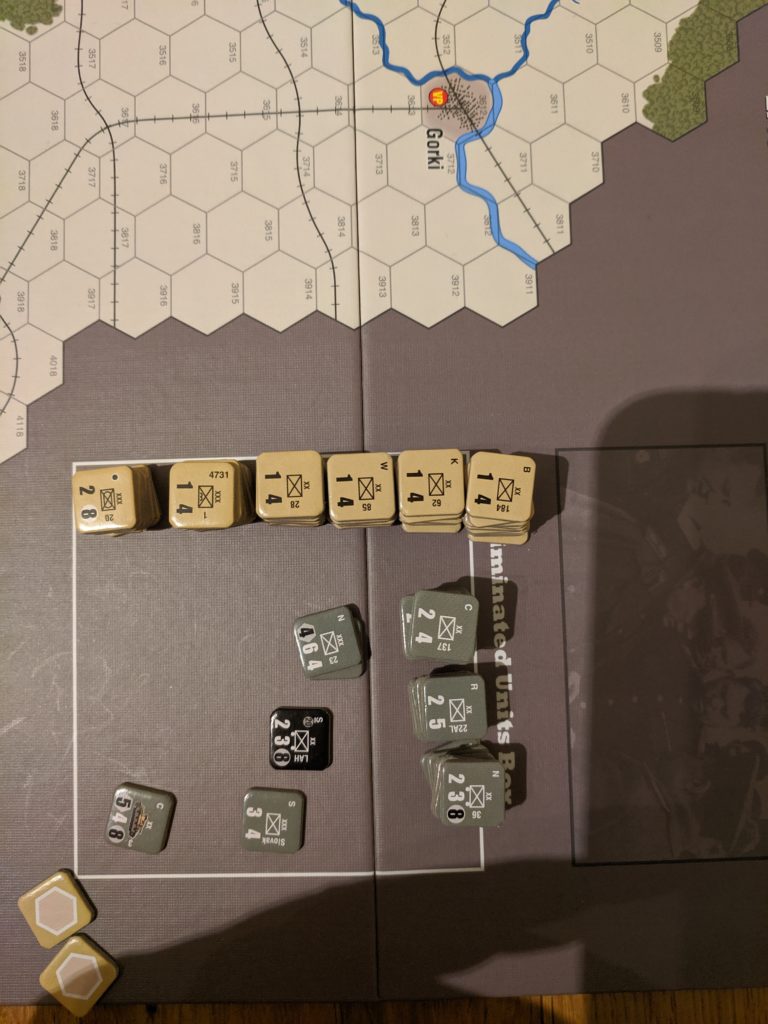
Turn 2 saw the Soviets shoring up reserves and trying to build a new line of defense. A dash to Riga ended with a lucky die roll and taking the city. However more cities are holding out properly. Defense is working in this game with both a defense combat bonus as well as a CRT shift in addition to halving of mechanized combat strengths. Repeated assaults cost the German already his first tank division (and it’s not even muddy yet …)
Soviet cavalry managed to run and hide in the Pripyet Marshes from the West while other Soviet Infantry units try to infiltrate through the same marshes from the east.
A whole swath of Soviet units along the Hungarian border was put OOS when key railway junctions at Lwow and Tarnopol were taken. However, as there is still a LOC to the eastern map edge, none of these units count as isolated.
I’m still learning at this point but references to the rule book are very rare. The game moves along at a very decent pace. It helps that some chit pulls activate only some units and the brittleness (?) of units keeps the game moving — no need to long, attritional stand offs.
On to turn three!